How One Ride Changed Rohan’s Mind About Electric Vehicles
Rohan was the kind of guy who loved the hum of a petrol engine. His weekend drives through Pune’s winding hills always started with the same ritual — the rumble of his hatchback. But when petrol prices crossed ₹130 per litre, even his loyalty began to waver.
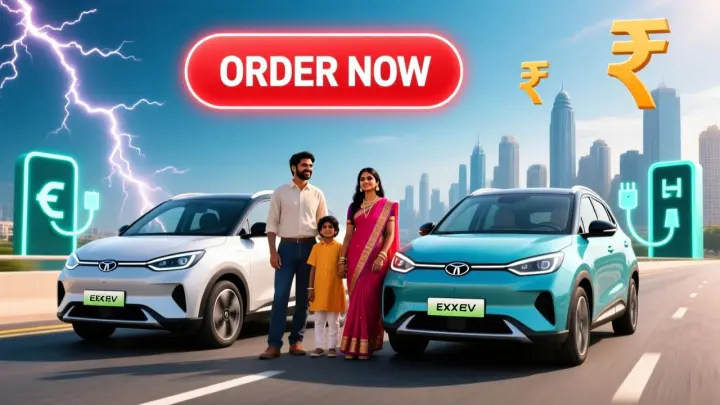
One weekday morning, his colleague Meera pulled up beside him in her sleek new Tata Nexon EV. She wasn’t just saving on fuel — she was smiling wider than ever as she quietly glided past traffic. That silent drive, effortless torque, and the savings she casually mentioned later got Rohan curious.
A few weeks of research (and Excel calculations) later, Rohan did what he never thought he would — booked his first EV.
Related Posts:
If Rohan’s journey sounds familiar, you’re not alone.
In 2025, thousands of Indians are waking up to the idea that electric vehicles aren’t just the future — they’re finally practical, affordable, and ready for our roads.
Why 2025 Is the Breakthrough Year for EVs in India
The Indian EV market has matured faster than many predicted. With multiple government incentives, expanding charging networks, and manufacturers like Tata, Mahindra, Hyundai, and MG doubling down on innovation, 2025 marks a decisive shift in how India drives.
Here’s what’s driving the change:
- Lower running costs: Electricity is cheaper than petrol or diesel by up to 80%.
- Reduced tailpipe emissions: Perfect for eco-conscious drivers.
- Incentives and tax benefits: Under FAME II and various state policies.
- Improved range and battery tech: Many mainstream EVs now cross 400–500 km per charge.
Understanding Electric Vehicles: Beyond the Buzzwords
What Exactly Is an EV?
An Electric Vehicle (EV) runs on power stored in rechargeable batteries instead of fossil fuel. It uses an electric motor for propulsion and can be charged using home sockets or public charging stations.
There are three main types:
- Battery Electric Vehicles (BEVs): Fully electric; no petrol or diesel engine.
- Plug-in Hybrid Electric Vehicles (PHEVs): Combine engine and battery for flexible range.
- Hybrid Electric Vehicles (HEVs): Primarily engine-driven with mild battery support.
For most Indian consumers, BEVs (like the Tata Punch EV or MG ZS EV) offer the best long-term savings and lowest maintenance.
Common EV Myths — And the Real Truth
Let’s bust some myths that often stop people from going electric.
1. “EVs Don’t Have Enough Range”
Not anymore.
Modern models like the Hyundai Ioniq 5 or Tata Nexon EV Long Range easily cross 450–500 km. That’s enough for a week’s commute in cities like Delhi or Bengaluru.
2. “Charging Takes Too Long”
With fast chargers (DC chargers), you can juice up to 80% battery in under an hour. Overnight home charging also ensures you always start your day with a full “tank.”
3. “Batteries Need Replacing Every Few Years”
Top EVs now come with 8-year battery warranties and advanced lithium-ion chemistry designed to last over 2,000 cycles — roughly 10 years of regular use.
4. “EVs Are Too Expensive”
Initial costs may be higher, but lifetime running cost savings (fuel + maintenance) can cross ₹5–10 lakh over 8 years. Plus, several banks and startups now offer EV-specific low-interest loans.
The True Cost of Owning an EV in India (2025 Edition)
EVs are often seen as premium, but when you break down all costs, the story changes dramatically.
| Category | Petrol Car | Electric Car |
|---|---|---|
| Upfront Price | ₹8–10 lakh | ₹10–13 lakh |
| Running Cost (per km) | ₹9–11 | ₹1–2 |
| Annual Maintenance | ₹15,000–₹18,000 | ₹6,000–₹8,000 |
| Lifetime Ownership (8 yrs) | ~₹13 lakh | ~₹8.5 lakh |
That’s a difference of ₹4–5 lakh saved, not counting environmental benefits or resale value.
Charging Infrastructure: The Game Changer of 2025
In 2022, charging was India’s biggest EV bottleneck. Fast forward to 2025 — not anymore.
- Over 12,000 public fast chargers now operate across major cities.
- Highways like Delhi–Chandigarh and Mumbai–Goa have charging points every 50–60 km.
- Platforms like Tata Power EZ Charge, Ather Grid, and ChargeZone offer real-time maps and app-based booking.
Home Charging Solutions:
EV owners can install a Type 2 AC charger at home for about ₹60,000–₹80,000. Most car manufacturers assist with installation during purchase.
Range Anxiety: Real or Overrated?
Range anxiety — the fear of running out of charge mid-journey — was once real. But now?
With current battery capacities (40–60 kWh) and the fast-charging network, most drivers never face it. Think of it like mobile data — you used to worry about running out, but now coverage is everywhere.
Smart trip planners and in-car navigation even suggest nearby chargers automatically.
EV Models to Consider in 2025
Top Electric Cars in India
- Tata Punch EV: Affordable compact SUV, 421 km range.
- Hyundai Ioniq 5: Luxury design meets 600 km range.
- MG ZS EV: Balanced performance and practicality.
- Mahindra XUV.e8: Advanced connectivity and AWD variant.
- BYD Seal: Premium sedan, impressive 650 km range.
Top Electric Two-Wheelers in 2025
- Ola S1 Pro Gen 2
- Ather 450 Apex
- TVS iQube ST
- Hero Vida V1 Pro
With charging time reduced and swappable batteries rising, EV two-wheelers now dominate Tier-1 and Tier-2 city markets.
EV Incentives and Government Policies (2025 Update)
The Indian government’s EV roadmap (2023–2030) aims for 30% electrification of new vehicle sales by 2030.
Key benefits for buyers:
- FAME II subsidy: Up to ₹1.5 lakh off for cars and ₹15,000 per kWh for two-wheelers.
- State-level benefits: Additional ₹50,000–₹1 lakh subsidy in Delhi, Gujarat, and Maharashtra.
- Tax rebates: Up to ₹1.5 lakh under Section 80EEB on EV loan interest.
Charging Etiquette and Smart Ownership Tips
- Always plan long drives with at least two alternate charging stops.
- Avoid keeping your battery at 0% or 100% constantly; aim for 20–80%.
- Use regenerative braking efficiently in city drives.
- Keep a portable charger handy for emergency top-ups.
The Environmental Edge: Driving Toward a Cleaner Future
Every EV reduces CO2 emissions by roughly 1.5 tonnes per year compared to petrol cars. Multiply that across lakhs of vehicles, and the numbers are staggering.
More importantly, EVs deliver cleaner city air and reduced noise pollution, drastically improving urban livability.
Should You Buy an EV in 2025?
If you drive more than 20 km daily, have regular parking space, and want long-term savings, then yes — buying an EV in 2025 makes financial and environmental sense.
Brands are offering reliable after-sales service, battery warranties, and financing options that make the switch easy and rewarding.
Final Thoughts: The Roads Ahead Are Electric
Rohan now laughs when he thinks about his old petrol bills. His weekend drives are quieter, cleaner, and cheaper than ever.
The EV revolution in India is not a distant dream anymore — it’s parked right outside your door, waiting to be driven.
If you’ve been on the fence, maybe 2025 is the year you silently cruise ahead — saving money, breathing cleaner air, and paving the way for a greener India.